Shipping supplies are often viewed as simple necessities. Boxes, tape, labels, padding. They are ordered, stocked, and used without much thought as long as shipments go out the door.
But shipping supplies quietly influence more than most businesses realize. They affect daily efficiency, long-term costs, and how customers perceive the business after delivery.
These effects are not always obvious at first. They show up over time, in ways that are easy to miss until patterns begin to form.
Shipping Supplies and Hidden Costs
The most visible cost of shipping supplies is the purchase price. What is less visible is how those supplies perform after they are used.
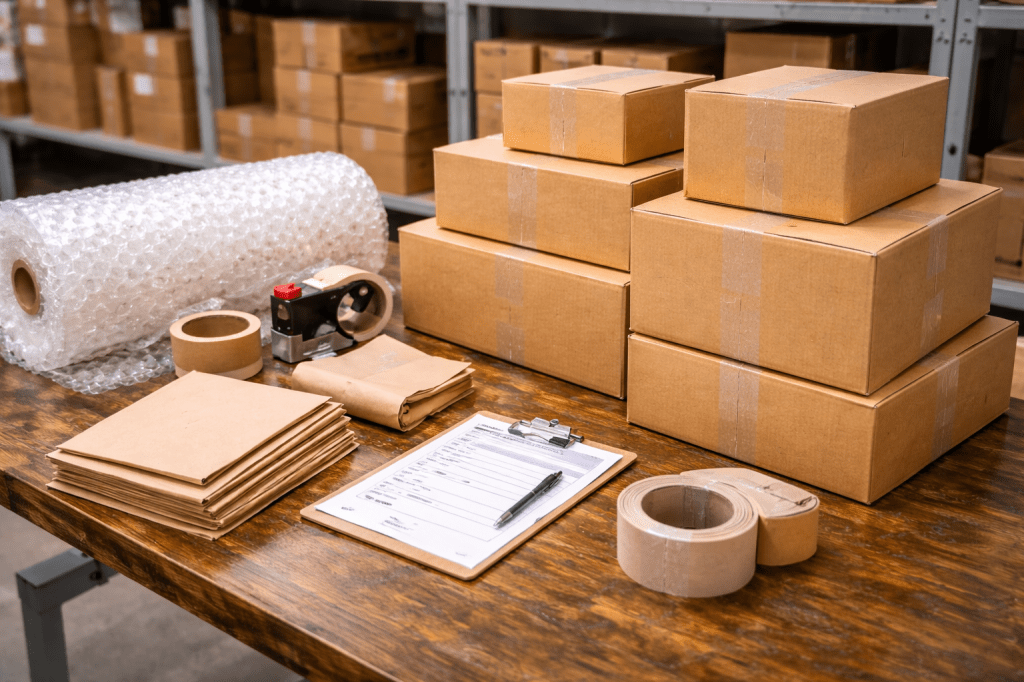
Weak boxes can lead to damaged products. Thin padding allows items to shift during transit. Tape that loses adhesion causes packages to open or require rework. Each failure creates extra costs that are not always tracked carefully.
Replacement shipments, refunds, additional labor, and customer service time all add up. Even when issues are handled quickly, they pull resources away from normal operations.
Reliable shipping supplies help prevent these hidden costs by reducing the number of problems that need to be fixed later.
Efficiency Starts at the Packing Table
Shipping supplies play a major role in how efficiently orders are packed.
Boxes that assemble easily save time. Padding that fills space properly reduces adjustment and repositioning. Tape that sticks on the first pass eliminates the need for multiple layers.
When supplies are inconsistent, packing slows down. Employees spend time compensating for weak materials by adding extra padding, reinforcing seams, or searching for better alternatives. These small delays add up across dozens or hundreds of orders.
Consistent shipping supplies allow packing to become routine. The fewer decisions required during packing, the faster and more accurate the process becomes.
Reducing Errors Through Consistency

Errors often occur when shipping supplies vary.
Different box sizes, tape types, or padding materials can lead to confusion, especially in busy environments. One employee may pack an order differently than another, leading to unpredictable outcomes.
Standardizing shipping supplies reduces this variability. When everyone uses the same materials and methods, results become more consistent. Fewer mistakes occur, and problems are easier to identify and correct when they do happen.
Consistency also makes training simpler. New employees learn one system instead of adapting to multiple approaches.
Shipping Supplies and Damage Prevention
Damage prevention is one of the primary purposes of shipping supplies.
During transit, packages are handled many times. They are stacked, shifted, dropped, and exposed to changing conditions. Shipping supplies must be able to withstand this environment.
Strong boxes protect against crushing. Proper cushioning absorbs shock. Secure tape keeps contents contained. Durable labels ensure packages are routed correctly.
When shipping supplies are chosen with real-world conditions in mind, damage rates decrease. This improves delivery outcomes and reduces the need for follow-up actions.
Customer Experience Starts with Packaging
Customers form opinions quickly.
When a package arrives damaged or poorly packed, confidence drops. Even if the product inside is unharmed, the experience feels careless. Customers may question the reliability of future orders.
On the other hand, a clean, intact package creates reassurance. It signals that care was taken throughout the process. Customers feel more comfortable ordering again.
Shipping supplies play a direct role in shaping these experiences. They influence how the delivery feels, not just whether it arrives.
Responsible Choices Without Sacrificing Performance
Many shipping supplies today are made using recycled or responsibly sourced materials.
Using these materials does not mean sacrificing strength or reliability. In many cases, they are designed to reduce waste while maintaining durability and performance.
Choosing responsible shipping supplies can help businesses reduce excess materials, improve efficiency, and operate more thoughtfully without changing how orders are protected.
Shipping Supplies as Long-Term Support
Shipping supplies should not create ongoing problems. They should quietly support daily operations.
When the right supplies are in place, packing becomes faster, errors decrease, damage rates drop, and customer confidence improves. These benefits build over time.
Shipping supplies are not just consumables. They are part of the system that keeps orders moving smoothly and businesses operating efficiently.
When shipping supplies work as intended, they remove friction from the entire process and allow everything else to run better.
 Distribution Concepts