Ever had a box give out?

It happens in the worst moments. You’ve packed the order, sealed it tight, and sent it off. Somewhere between here and the customer, the box folds under pressure, tape tears loose, and the shipment shows up looking like it barely survived. To the customer, it’s not just a broken box—it’s a broken promise. That’s the danger of relying on boxes that aren’t built for the journey.

Shipping boxes aren’t just containers; they’re shields. They protect products from bumps, stacking, moisture, and the rough ride of delivery trucks. A strong box doesn’t groan under weight, doesn’t collapse when stacked, and doesn’t betray what’s inside. It holds firm, carrying your reputation with every mile it travels.

The problem with weak boxes is simple: they cost you twice. Once when you buy them, and again when you replace the orders they couldn’t protect. A single failed shipment means refunds, replacements, and hours lost in customer service. It also means reviews that tell the world your brand didn’t deliver. Customers rarely praise the box, but they always complain when it fails.

Better boxes flip that story. Picture handing a package to a carrier, knowing it’s built to handle the bumps and drops along the way. Imagine the relief when heavy products sit secure inside double-wall cartons, or when fragile items arrive intact because the box is held up through stacking. That quiet confidence is worth more than the cost of stronger materials.

And then there’s the efficiency. Packing lines move faster when boxes fold properly and stay upright during assembly. Workers don’t waste time doubling tape or stuffing filler just to make up for flimsy walls. That saved time becomes saved money, and the entire process runs smoother.
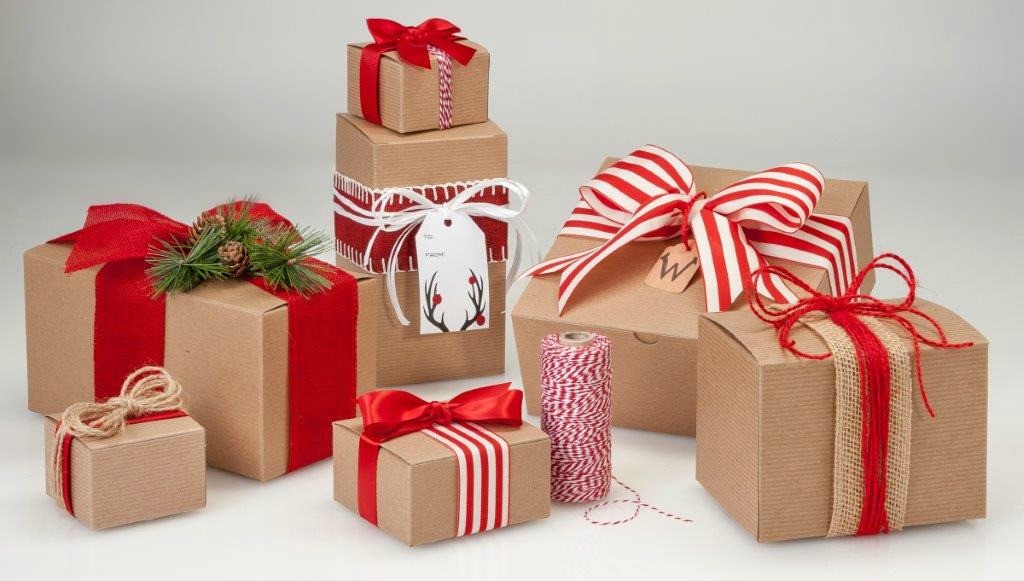
Boxes also carry an unspoken message. A customer who lifts a sturdy package from their porch feels the weight of reliability before they ever see the product. The corners are sharp, the seams are solid, and the package feels professional. That impression lingers. It says your business cares about quality from start to finish.

Sustainability strengthens the story. Eco-friendly shipping boxes made from recycled material are now common, and customers notice. They appreciate packaging that can be recycled after use, and they connect that choice to your brand’s values. It’s another way packaging speaks louder than advertising.

At the end of the day, shipping boxes decide whether your product shows up as promised or as a problem. Weak ones give out at the worst times. Strong ones deliver not just items but confidence. And confidence is what turns first-time buyers into repeat customers.

So ask yourself: are your boxes working for you, or against you? If you’ve ever had one give out, you already know the cost. It’s not just cardboard—it’s the trust your business is built on. Protect it with shipping boxes that deliver on every promise.
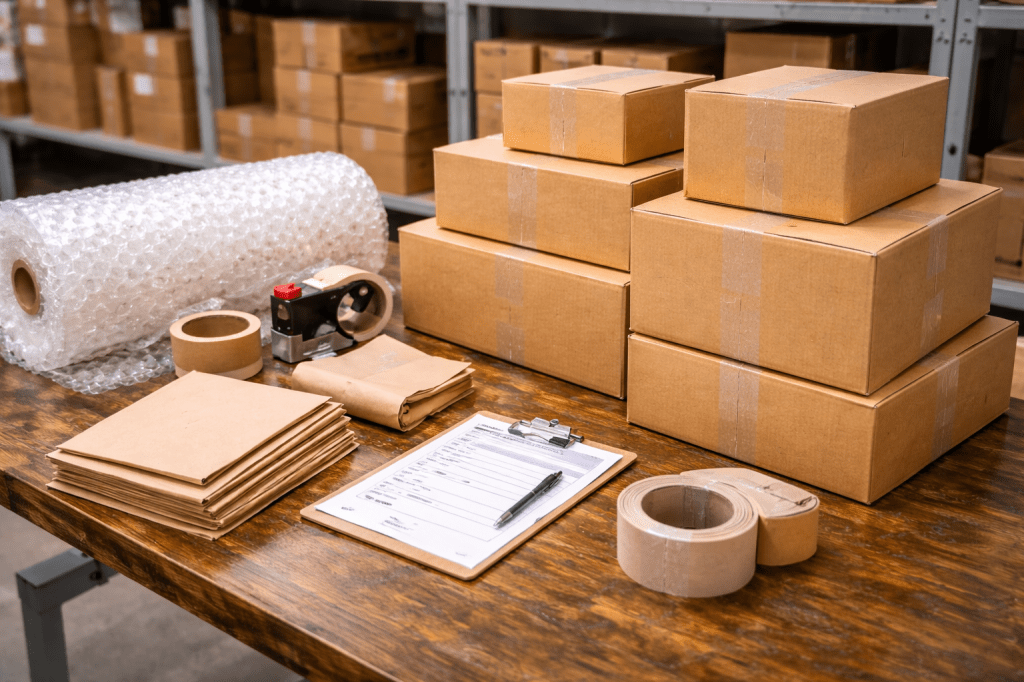

How Shipping Supplies Influence Costs, Efficiency, and Customer Trust

Shipping supplies are often viewed as simple necessities. Boxes, tape, labels, padding. They are ordered, stocked, and used without much thought as long as shipments go out the door.

But shipping supplies quietly influence more than most businesses realize. They affect daily efficiency, long-term costs, and how customers perceive the business after delivery.

These effects are not always obvious at first. They show up over time, in ways that are easy to miss until patterns begin to form.

Shipping Supplies and Hidden Costs

The most visible cost of shipping supplies is the purchase price. What is less visible is how those supplies perform after they are used.

Weak boxes can lead to damaged products. Thin padding allows items to shift during transit. Tape that loses adhesion causes packages to open or require rework. Each failure creates extra costs that are not always tracked carefully.

Replacement shipments, refunds, additional labor, and customer service time all add up. Even when issues are handled quickly, they pull resources away from normal operations.

Reliable shipping supplies help prevent these hidden costs by reducing the number of problems that need to be fixed later.

Efficiency Starts at the Packing Table

Shipping supplies play a major role in how efficiently orders are packed.

Boxes that assemble easily save time. Padding that fills space properly reduces adjustment and repositioning. Tape that sticks on the first pass eliminates the need for multiple layers.

When supplies are inconsistent, packing slows down. Employees spend time compensating for weak materials by adding extra padding, reinforcing seams, or searching for better alternatives. These small delays add up across dozens or hundreds of orders.

Consistent shipping supplies allow packing to become routine. The fewer decisions required during packing, the faster and more accurate the process becomes.

Reducing Errors Through Consistency

Errors often occur when shipping supplies vary.

Different box sizes, tape types, or padding materials can lead to confusion, especially in busy environments. One employee may pack an order differently than another, leading to unpredictable outcomes.

Standardizing shipping supplies reduces this variability. When everyone uses the same materials and methods, results become more consistent. Fewer mistakes occur, and problems are easier to identify and correct when they do happen.

Consistency also makes training simpler. New employees learn one system instead of adapting to multiple approaches.

Shipping Supplies and Damage Prevention

Damage prevention is one of the primary purposes of shipping supplies.

During transit, packages are handled many times. They are stacked, shifted, dropped, and exposed to changing conditions. Shipping supplies must be able to withstand this environment.

Strong boxes protect against crushing. Proper cushioning absorbs shock. Secure tape keeps contents contained. Durable labels ensure packages are routed correctly.

When shipping supplies are chosen with real-world conditions in mind, damage rates decrease. This improves delivery outcomes and reduces the need for follow-up actions.

Customer Experience Starts with Packaging

Customers form opinions quickly.

When a package arrives damaged or poorly packed, confidence drops. Even if the product inside is unharmed, the experience feels careless. Customers may question the reliability of future orders.

On the other hand, a clean, intact package creates reassurance. It signals that care was taken throughout the process. Customers feel more comfortable ordering again.

Shipping supplies play a direct role in shaping these experiences. They influence how the delivery feels, not just whether it arrives.

Responsible Choices Without Sacrificing Performance

Many shipping supplies today are made using recycled or responsibly sourced materials.

Using these materials does not mean sacrificing strength or reliability. In many cases, they are designed to reduce waste while maintaining durability and performance.

Choosing responsible shipping supplies can help businesses reduce excess materials, improve efficiency, and operate more thoughtfully without changing how orders are protected.

Shipping Supplies as Long-Term Support

Shipping supplies should not create ongoing problems. They should quietly support daily operations.

When the right supplies are in place, packing becomes faster, errors decrease, damage rates drop, and customer confidence improves. These benefits build over time.

Shipping supplies are not just consumables. They are part of the system that keeps orders moving smoothly and businesses operating efficiently.

When shipping supplies work as intended, they remove friction from the entire process and allow everything else to run better.

How Edible Packaging is Reducing Waste by Making it a Part of The Product 

Edible packaging is a new and intuitive solution for a lot of problems, including of course, plastic waste. We tend to throw out a ton of our waste in the form of wrappers and various other dunnage that we get from the food we consume.

Edible packaging however seeks to change that. They fit into the unique trend of a zero waste lifestyle and eco-consciousness, which is of course, a big part of what customers want. 

Elements of Edible Packaging 

Edible packaging comes with unique elements that are worth mentioning, especially for those who seek to reduce the plastic that they use for their packaging. 

For instance, we use a lot of plastic for wrappers and various containers to house the items. But edible packaging takes that all out, and replaces it with rice paper, seaweed, gelatin, and other aspects. The goal of this is to ensure that longevity and safety are maintained without chemical preservation. 

You want to use plant-based packaging for this.  Ultimately, anything with cellulose works because even if not consumed and thrown back in the ground, it will naturally break down with time, and allow for new life to grow. You’re not wasting it in a landfill, but instead putting it in a great location. 

Ensuring Safety and Edibility 

The one thing that edible packaging also does, is that it’s made in a manner where it can be safely consumed. 

It’s a great idea, but it’s best used with items that are fresher in nature, such as pastries, sandwiches, and the like, and less for items that will sit on store shelves. This is because they do naturally break down with time, and if you waste your edible packaging on those things, it can ultimately pose problems as well.

You want to make sure that the items you use won’t go bad or rot, because that may cause problems with consumers. You also want it to be able to be safely consumed, and taste good as well. 

This is a big part, because a lot of consumers aren’t very open to the idea of this type of packaging because it tastes foul, so if you can figure out how to make it work, then you’ll definitely want to try it.

In some ways, we already use this. seaweed snacks, especially rice balls, are one. The same goes for ice cream cones. You literally eat the cone.   More and more novel ways are being used to create these unique snacks and edible packaging that many consumers love.

Benefits and Drawbacks 

There’s pros and cons to using this, which we’ll go over here.

The first, is that this does drastically reduce the single-use plastics and packaging waste. This is because it makes the packaging easy to consume, allowing for customers to have it, and also be able to throw out the items without as much guilt.

There are some challenges that come with this, however. First, you want to make sure that they are flavorful for the item you’re packaging, and fit the flavor. You also want to make sure the texture isn’t too extreme.

Finally, you want to make sure that consumer acceptance of this packaging material are properly aligned. If the item is not palatable to consumers, then chances are they won’t want to consume it. so keep all of this in mind, and also bear in mind too that there are a lot of other factors that will go into this, and also should be properly factored in for your own consumption. 

Built-In Lighting Packaging 

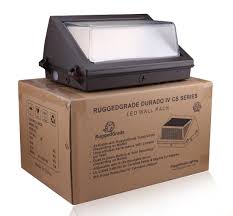
Packaging that has extra little bells and whistles is always a great way to improve the customer experience. One way to do such is through lighting. Adding LEDs improves the functionality and the aesthetics of the packaging that’s there.   Some even like it, because when they open it they get a direct view of the time that they bought, thereby improving the packaging experience, and all that comes along with such. 

The applications of this Product 

There’s a ton of great ways to make these products stand out/ 

Premium products will shine with this. Giving these lights something worthwhile will really enhance the experience, and make it really memorable.

Special editions are another. Giving special edition products something that’s simple, yet effective will make it even more exciting.

Some also benefit from this on a functional level. Those packages that are delivered at night, or in dark locations, will benefit from this. customers can open it, and in turn really show off the items that they have and love. 

Technological Elements for This 

There’s a lot of technological boosts that come with this lighting and what it provides. 

Rechargeable light modules are one. Some companies have these light modules that they plug in, and when it’s ready, they pull it out and ship the product. It works great, and can provide memorable packaging for many people. 

Another one is disposable lights, which have some juice to it, and eventually die.   

There’s even motion-detected lights where if you wave your hand, open the packaging, or even touch a certain sensor bar, it will cause the item to open up. overall, there’s a lot of great ways for technology to really stand out, and you can do just this in the packaging that you have. 

Overall, the new technological experiences do impact the way your packaging works, so you should always try to look at different ways you can manipulate and improve the packaging to craft memorable ways to make the unboxing experience different. 

The benefits 

This type of packaging does cost a bit more, but there’s a lot of benefits that come with this.

The biggest one is that it creates a luxurious experience, which can make the packaging feel premium and exciting for the customers. 

It also helps with creating memorable unboxing experiences too. more customers are going to benefit from this type of experience, so you’ll definitely want to consider using this type of unboxing experience to make things exciting, and really shine.

Overall, it does make the product stand out.   it’s different. not everyone’s out here giving their packaging some kind of unique lighting system, so you can do just that, and so much more, with the products that you have. Memorable unboxing experiences means for the business a lot of great ways to make the packaging shine, and stand out in so many fun ways. 

The Future innovations 

There’s  lot of future innovations that are here.   you’ll see lighting that’s dynamic, and reacts to different ambient settings. Some have made them dim and brighten the items based on the factors that are there.

Sometimes, you can even add customer interactions for the product itself.   You can have the packaging respond to a customer’s motions, such as hand on the sensor and whatnot.

Overall, you want to consider this type of packaging, and what it can do for you. As a packaging and product provider, giving them lighting might be the best way for you to stand out, giving customers a unique, memorable experience that will help to make your packaging really improve on all levels too. 

Transparent Packaging without Plastic: Is it Possible 

Customers want to see the product inside, but there is just one problem. Plastic. It’s not eco friendly, so it’s not good for the environment. It also is going to create greater waste as well, especially over time. This challenge becomes a problem for brands, especially those looking to have a more sustainable edge to things. 

Is there a solution? Yes, there is, and in this, we’ll go over the challenge, solutions, and ways to design such items without needing to rely on plastic. 

Solutions 

More and more eco-friendly alternatives to plastic are coming down the pipeline and market. Some of course, are also transparent too, offering the perfect plastic-free experience that you wish to have.

Biofilms are one of these. These films are made with a transparent covering, but are made from plant materials. Again, transparent, but also sustainable for long-term success. 

Another is cellulose-based windows. These are packaging windows for your items, used to show what’s inside, but instead of them being made with some plastic, it’s made with, well, cellulose. 

Finally, there are viewing panels which are  water-soluble.   These panels offer the transparent look to them, but also again, won’t create excess waste. All of these are great. Though some have their own challenges, such as the water soluble ones needing to be away from water so they break down, they are transparent packaging solutions to consider. 

The Industries Benefiting 

Any snacks and food items will benefit from this type of packaging. That’s because many of them use transparent windows for their items, and by offering this without plastic, it achieves the sustainable visibility that one wants to have.

Tools and textiles are another. For these, you want to show the item that’s inside, such as designs and patterns, and if it’s fitting for the job. Again, removing plastic is a great, eco-friendly solution. 

Finally retail gift sets. Those gift baskets from people are great, because with such gift sets, you’ll be able to show off all of the unique goods that are inside, and make it look better too. 

Design Adjustments 

Some people may wonder if you have to just keep it boring and transport? The simple answer, is no, it’s not like that. using textures and printing to simulate the transparency is on design tactic that’s used when needed.   sometimes you can even texture the films that are there to create a unique design that will stand out.   you may also use the printing of more ecofriendly items to show it being transparent as well. again, works great if the biofilms are not going to work for you. 

The Future of This 

With transparent packaging, the future is making this better, and also more sustainable. 

Some are using compostable clear pouches, which are strong and biodegradable. Som of the pouches are not only plastic-free, but when you toss them, they break down instantly. Again, it’s pretty great, and offers a sustainable solution that can bee used not just in the here and now, but in the long run.

There’s also hybrid windows, where you can mix different items to create a more hybrid sort of packaging. This is a fun way to show off the item, without using so much plastic, and will create a unique feature you might not se in all of your plastic packaging. 

Again, going transparent with your items is great, except for the plastic. With the solution however, you take plastic out of the picture, offering a sustainable, useful situation that will in turn, improve the overall aspects of your packaging, and helps to solve a longstanding problem.